CPSR
28 Jan 2023 - 17 Jun 2023
- A long time ago I was part of an organization (now defunct), Computer Professionals for Social Responsibility, that was trying to promote ethics in technology, but in what now seems like an era of of relative calm, with stable institutions and a slower pace of change. I feel a need for something like that today but don't know what it would look like.
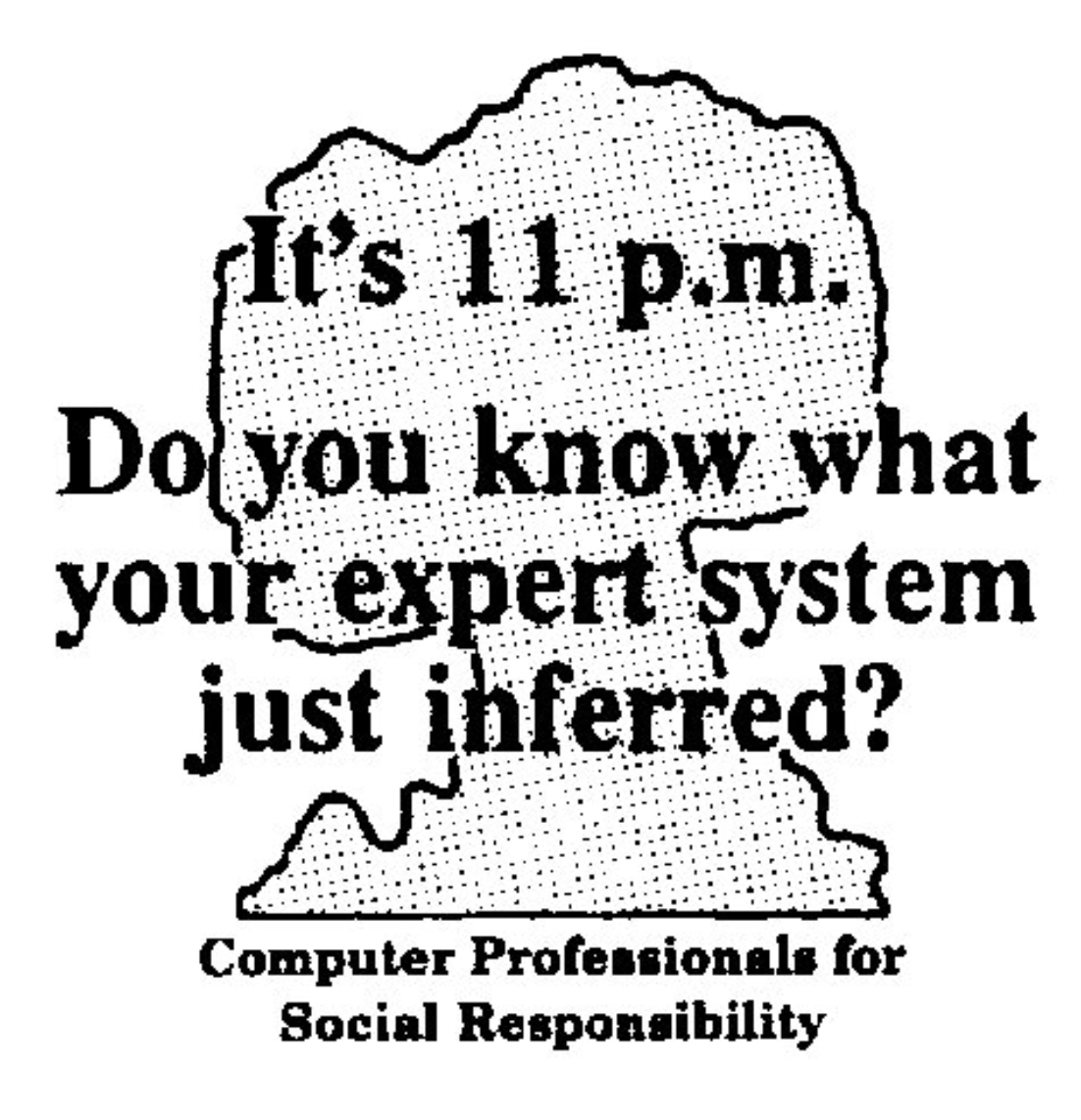
- I was an occasional member of CPSR and even organized a panel session at the DIAC-92 conference Directions and implications of advanced computing
A panel discussion convened by Michael Travers of the MIT media lab on "Virtual Societies and Virtual Communities" also addressed this theme. This panel included several people who have been involved with electronic communities for years. Sandy Stone has studied the relationship between technology and social relations from telephone sex to electronic networks to MUDs. The communities discussed included the purely social like Pavel Curtis's LambdaMOO MUD (MultiUser Dungeon or Multi-User Dimension) at Xerox PARC as well as the more utilitarian Media-Space project presented by Susan Irwin (also from PARC). MUDs are "network-accessible, multi-participant, user-extensible," text-based "virtual realities." Participants ("players") interact each with other in an artificially constructed and dynamic environment. Irwin's Media Space project supports remote video presence for distributed collaborative research teams. The Media Space mutually linked meeting rooms in Portland and Palo Alto with live video and audio coverage. Far from being a pep rally on these technologies, the panelists talked at length about alienation and "addiction" that some users experience in addition to more positive attributes. John Barlow pointed out that while "social interactions" do occur we shouldn't equate them with face-to-face interactions. He quoted Bruce Sterling as saying, "It isn't exactly an Amish barn-raising in there!"
- From closed world discourse to digital utopianism: the changing face of responsible computing at Computer Professionals for Social Responsibility (1981–1992)
- This is a fascinating article that charts the rise and fall of CPSR along with the underlying social dynamics of the tech world, from big institutional labs and Cold War mentality to the hypercapitalist internet era.